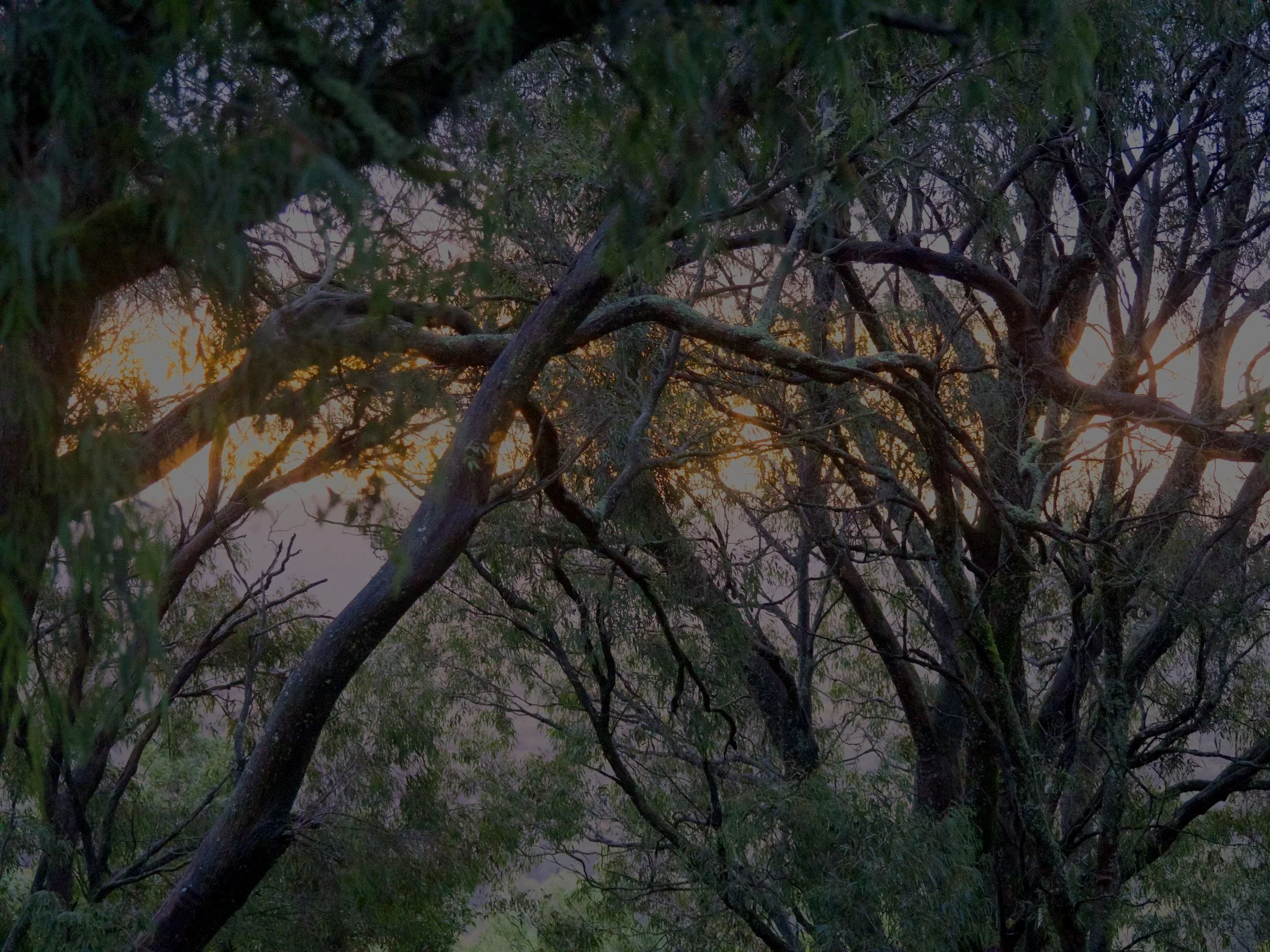
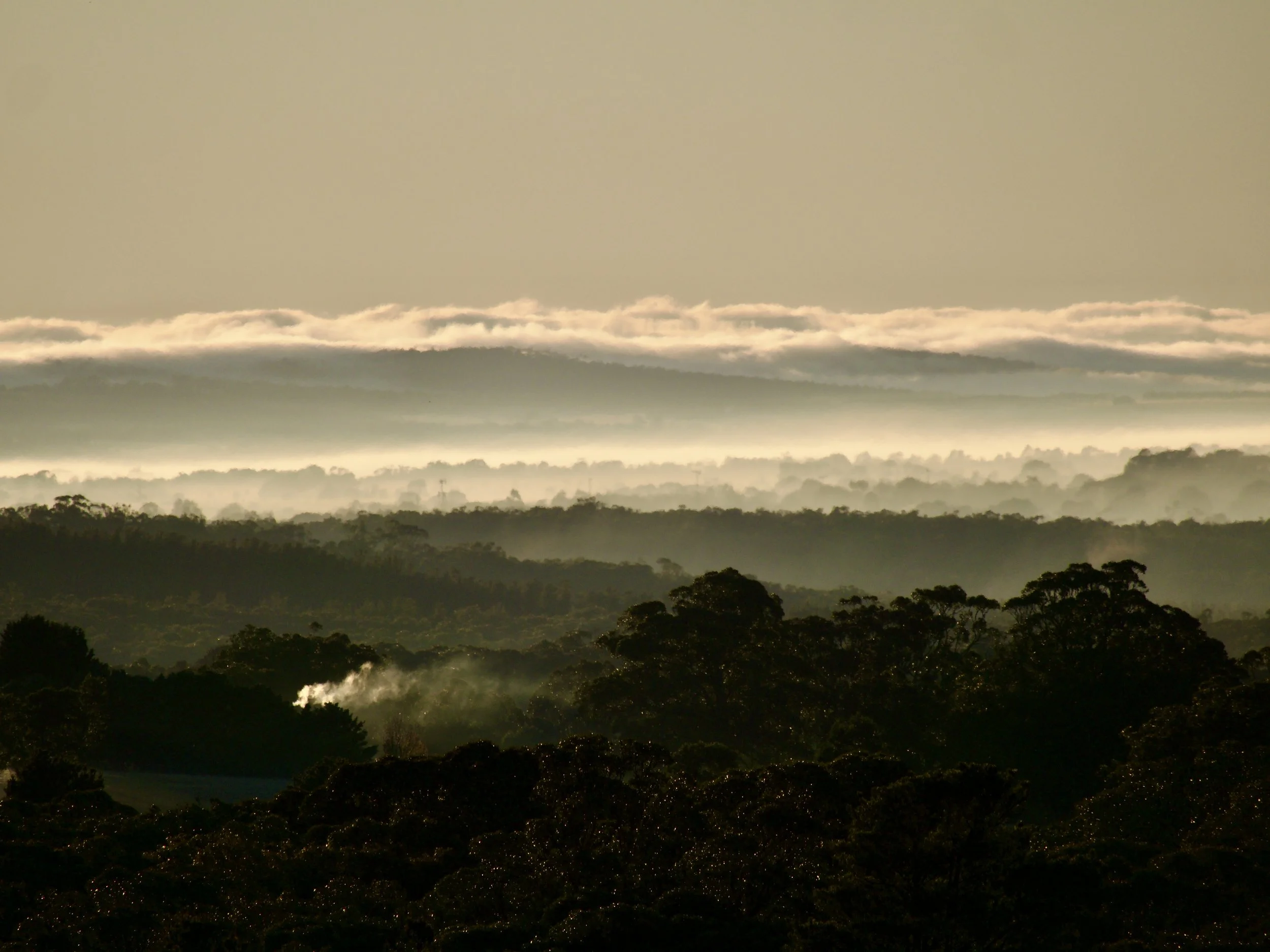
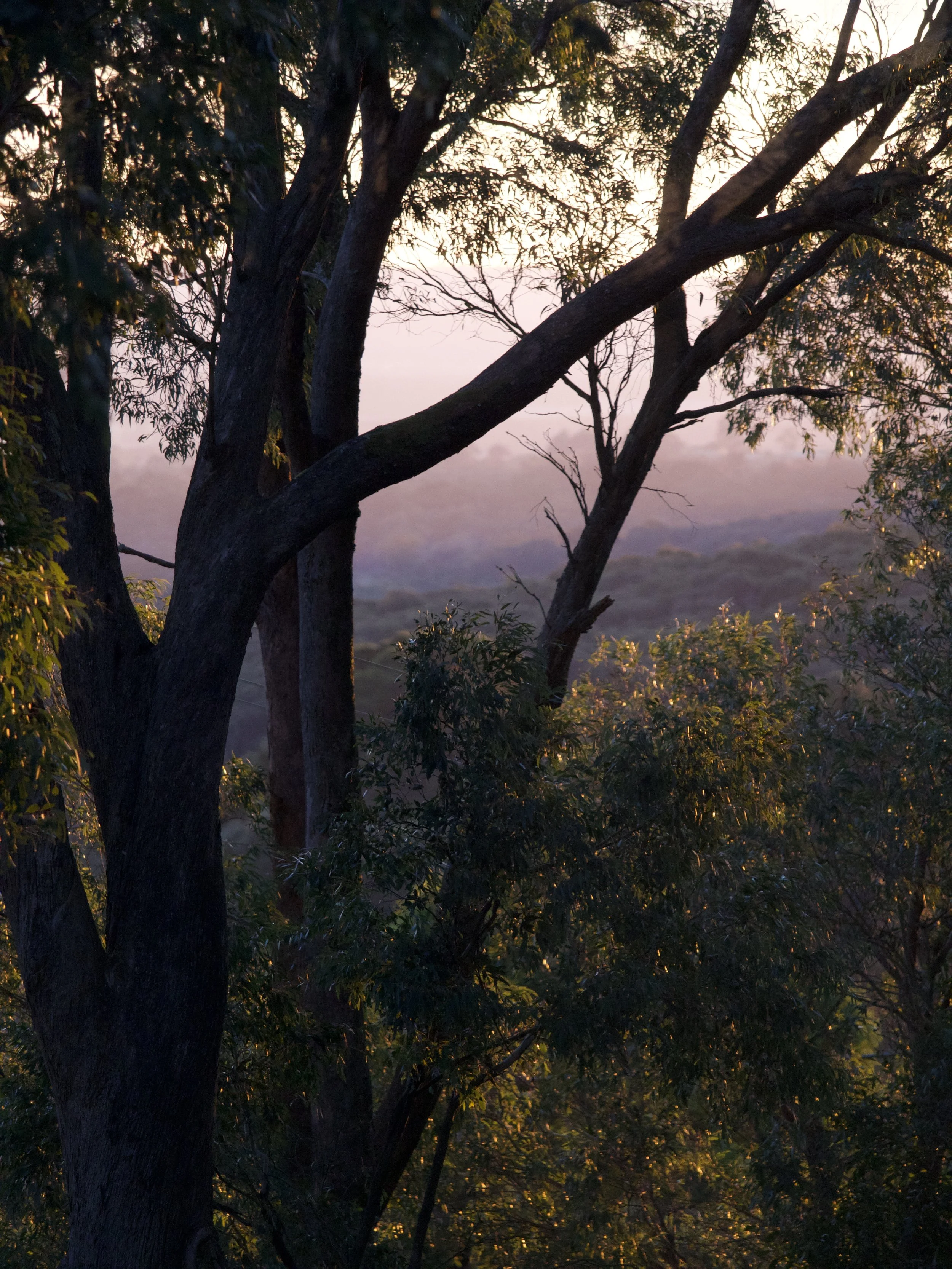
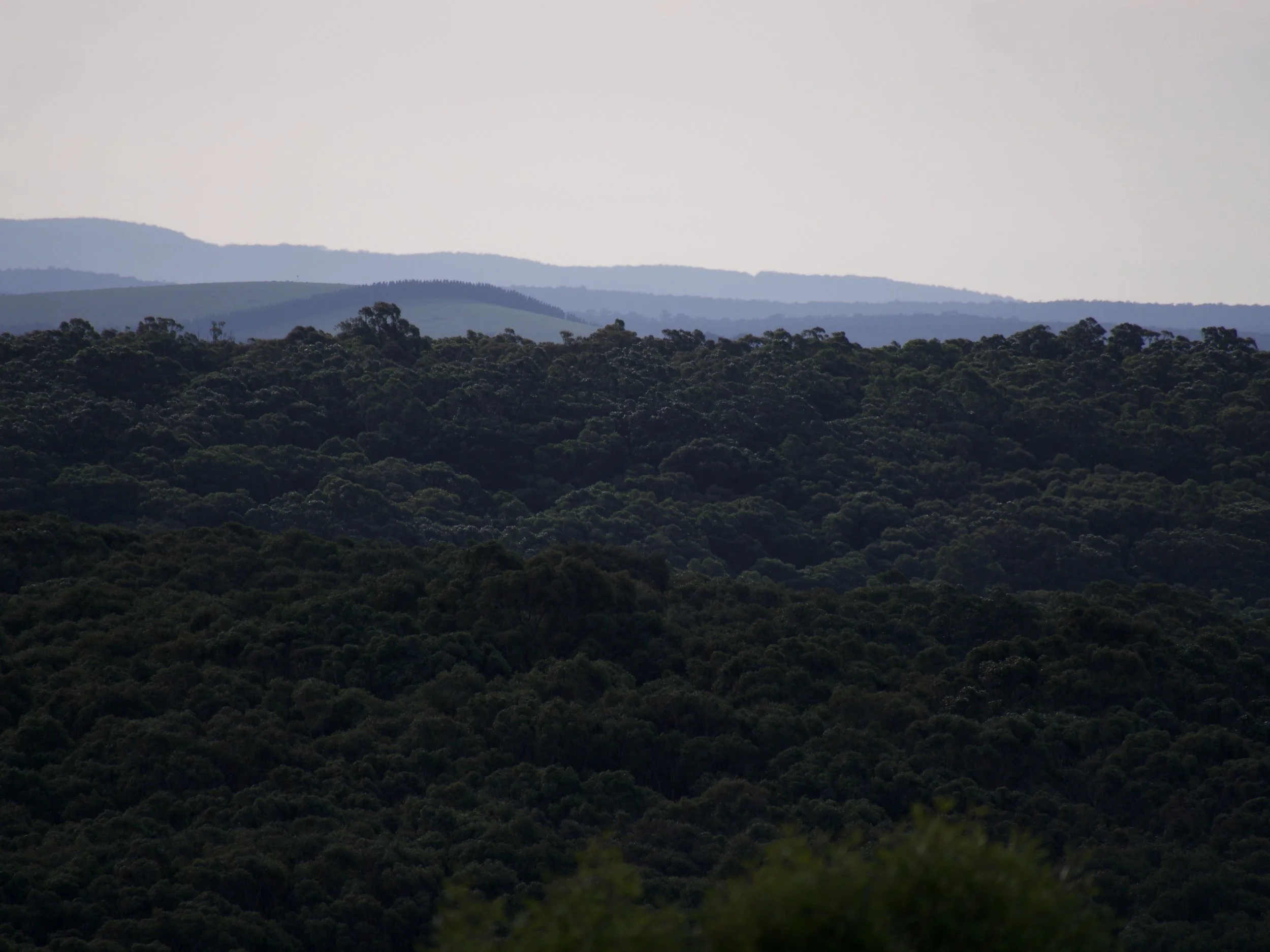
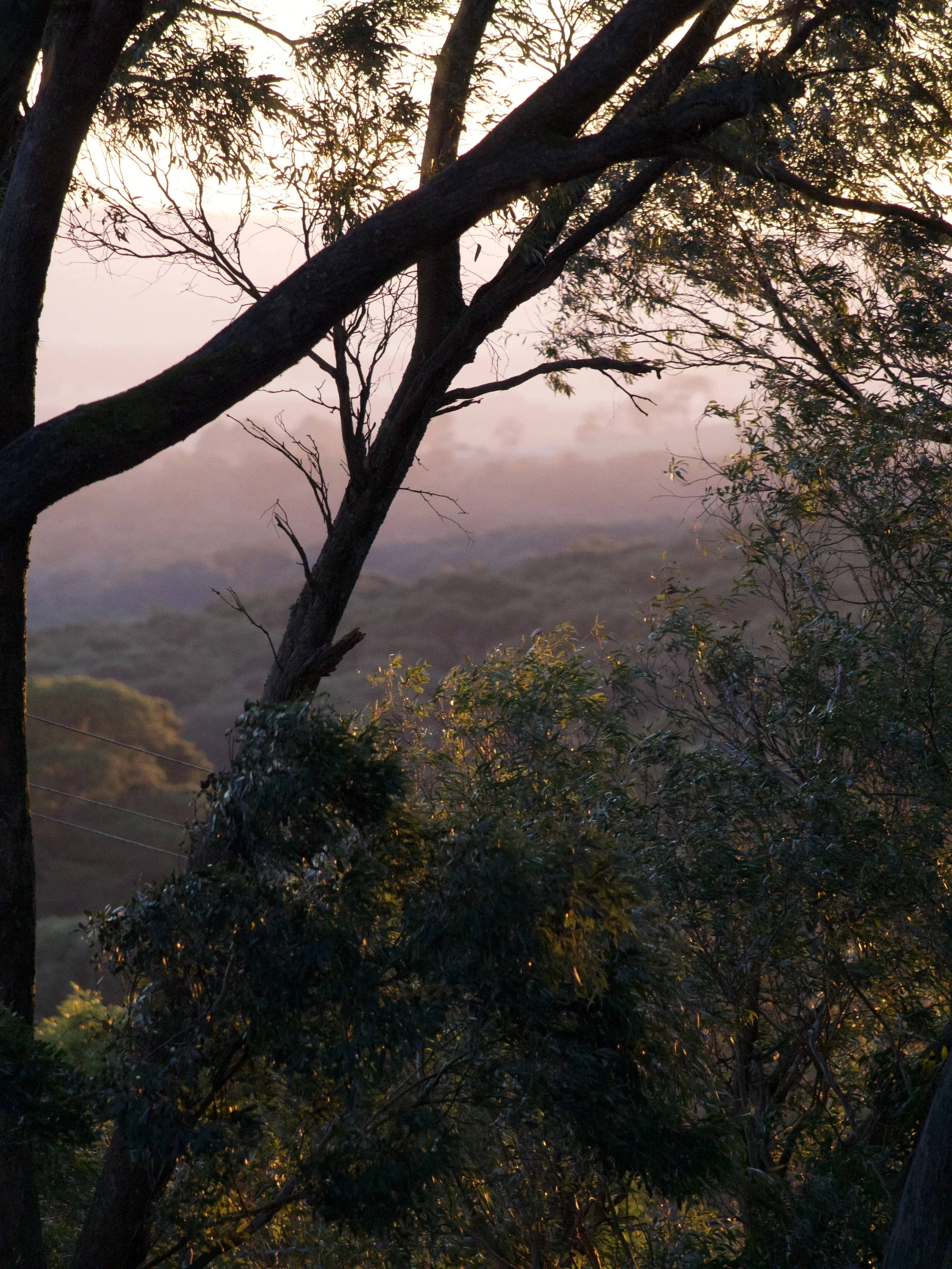
Mount Egerton is on Wadawurrung Country in Victoria’s Southern Central Highlands. Moonlite Studios is set amidst grassy woodlands and remnants of the historic Bungal (Bundjiil) forest.
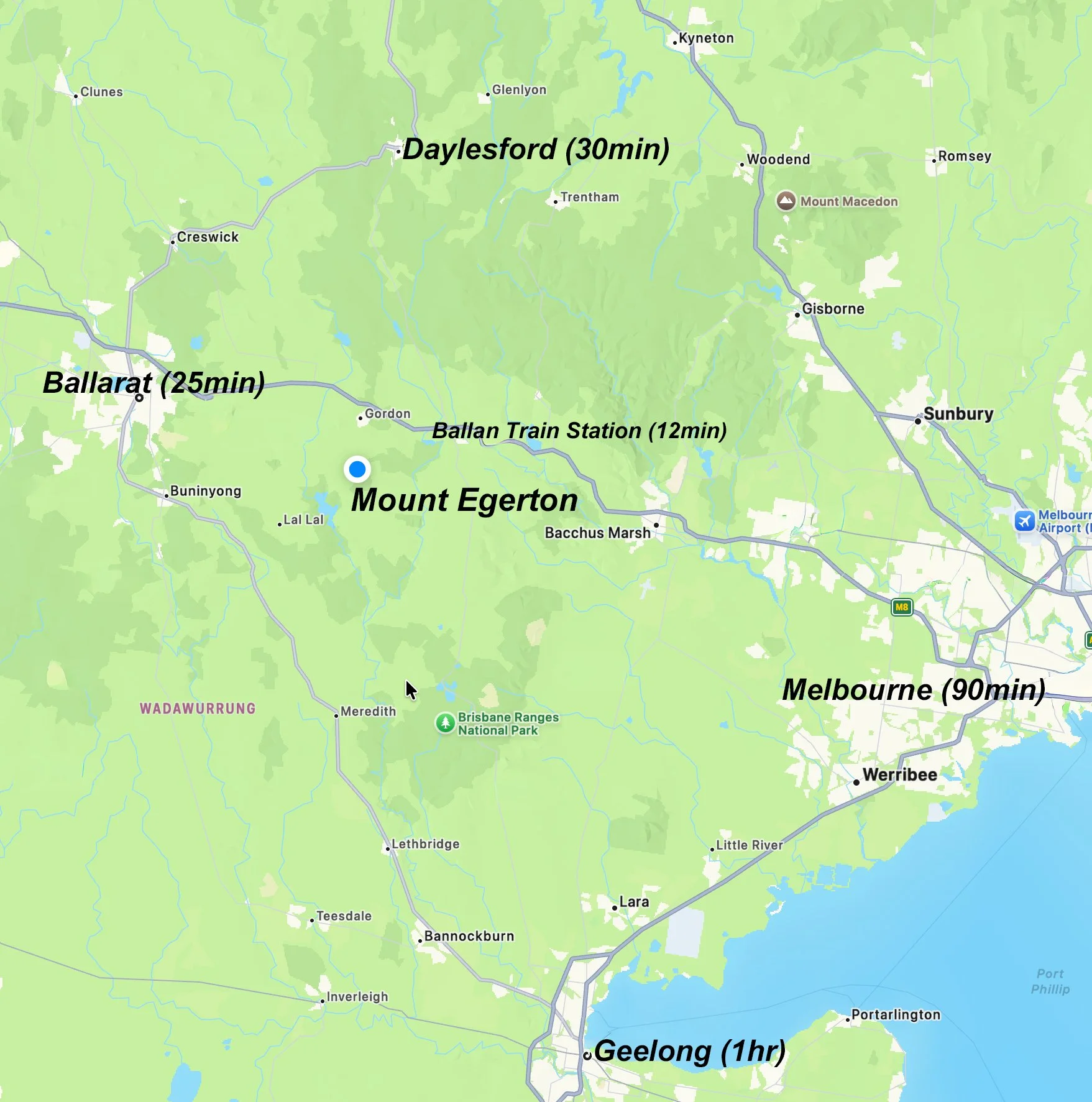
Situated on the southern branch of the Great Dividing Range, the studio lies between Daylesford’s mineral springs to the north and Lal Lal’s ancient Devonian gorges to the south. Ballarat’s gold country lies to the west, and the city of Melbourne further east.
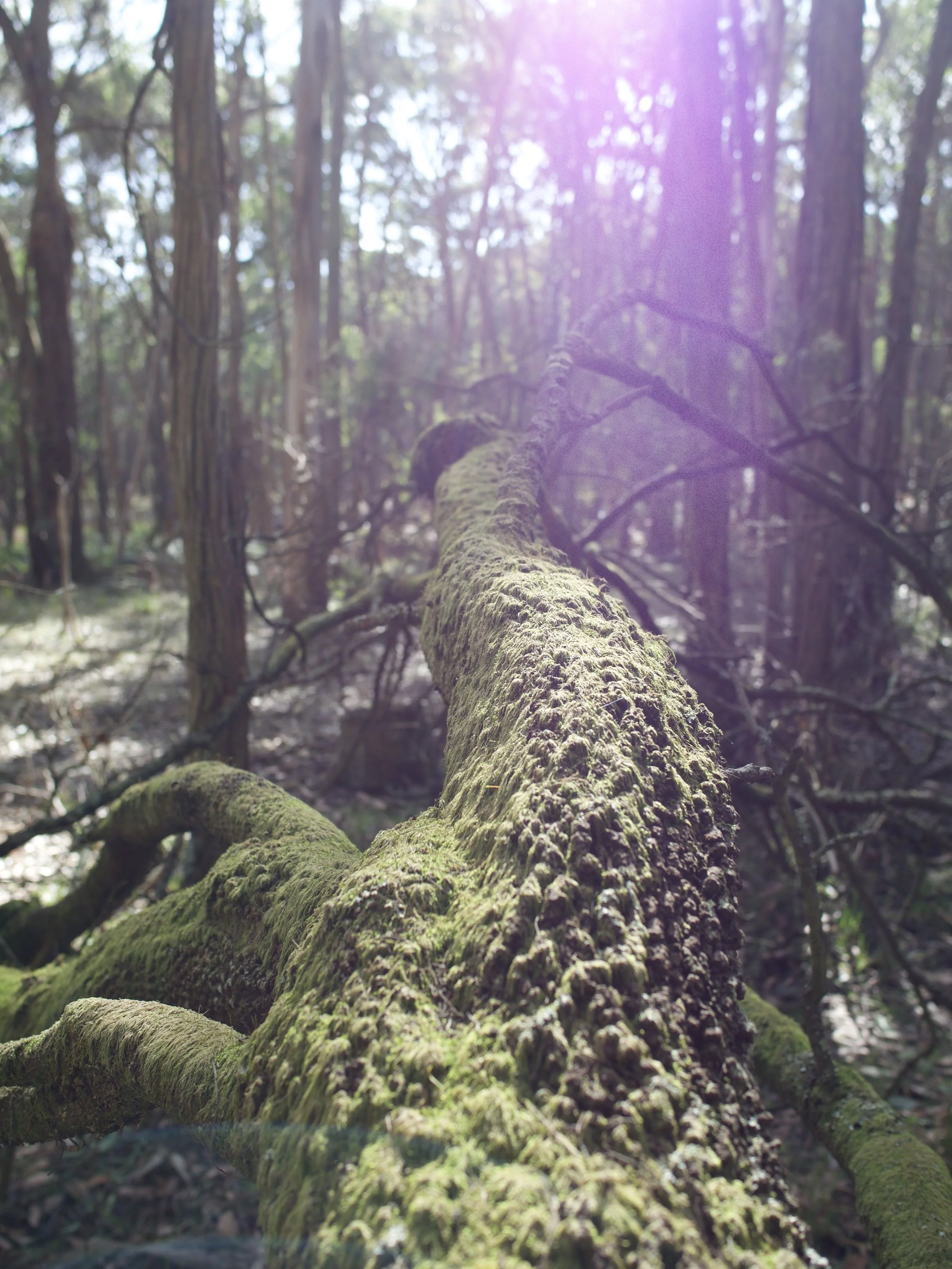
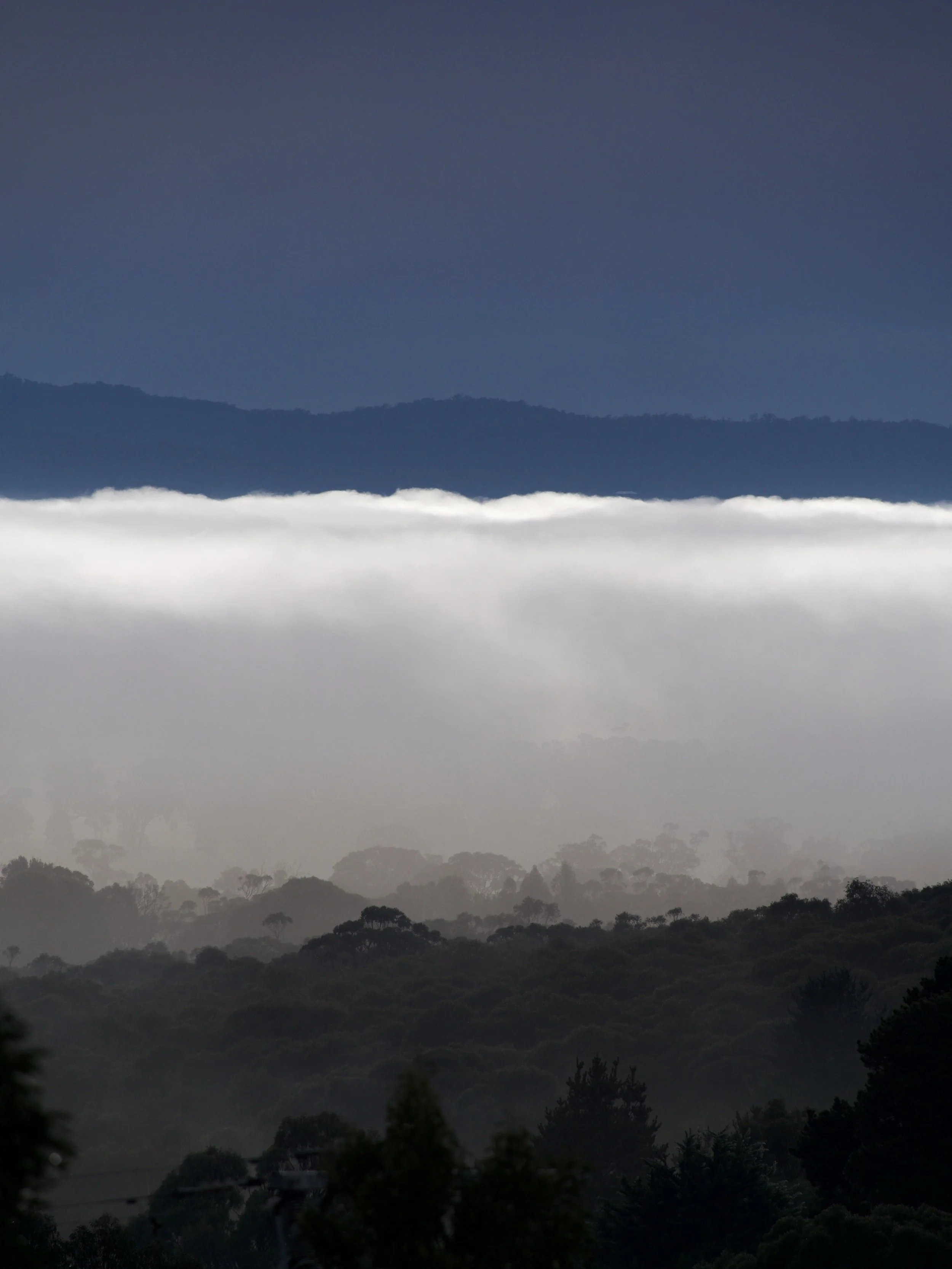
Mount Egerton is shaped by the meeting of these landscapes. Devonian and kaolin soils, gold deposits, rich farming country, and remnant forest ranges overlap here. It is cool-temperate Country, filled with mosses and lichens, and shaped by prevailing winds and mists.
Once busy with gold and kaolin mining, Mount Egerton gradually contracted. It is now a quiet locality without shops or a commercial centre.

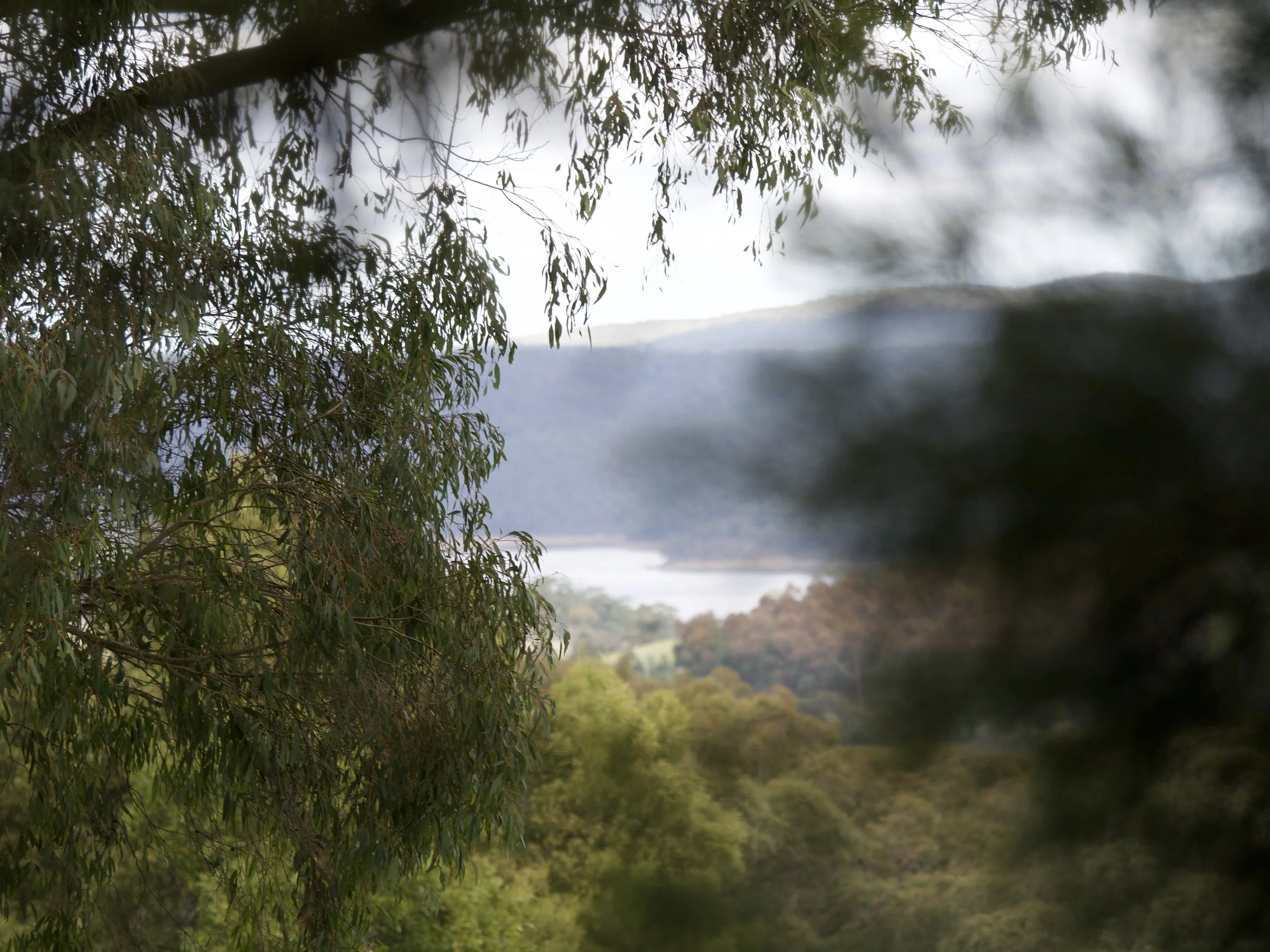
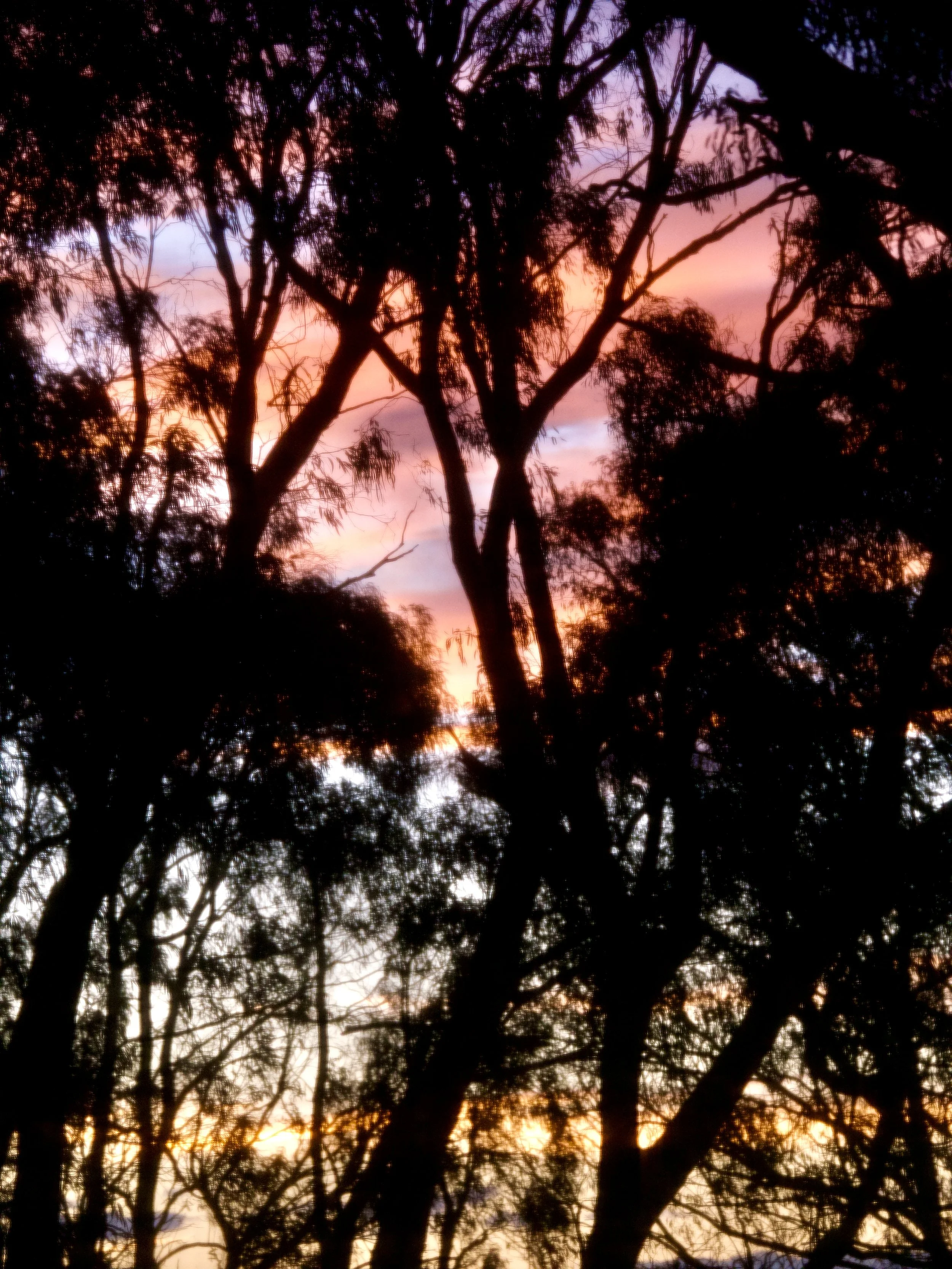
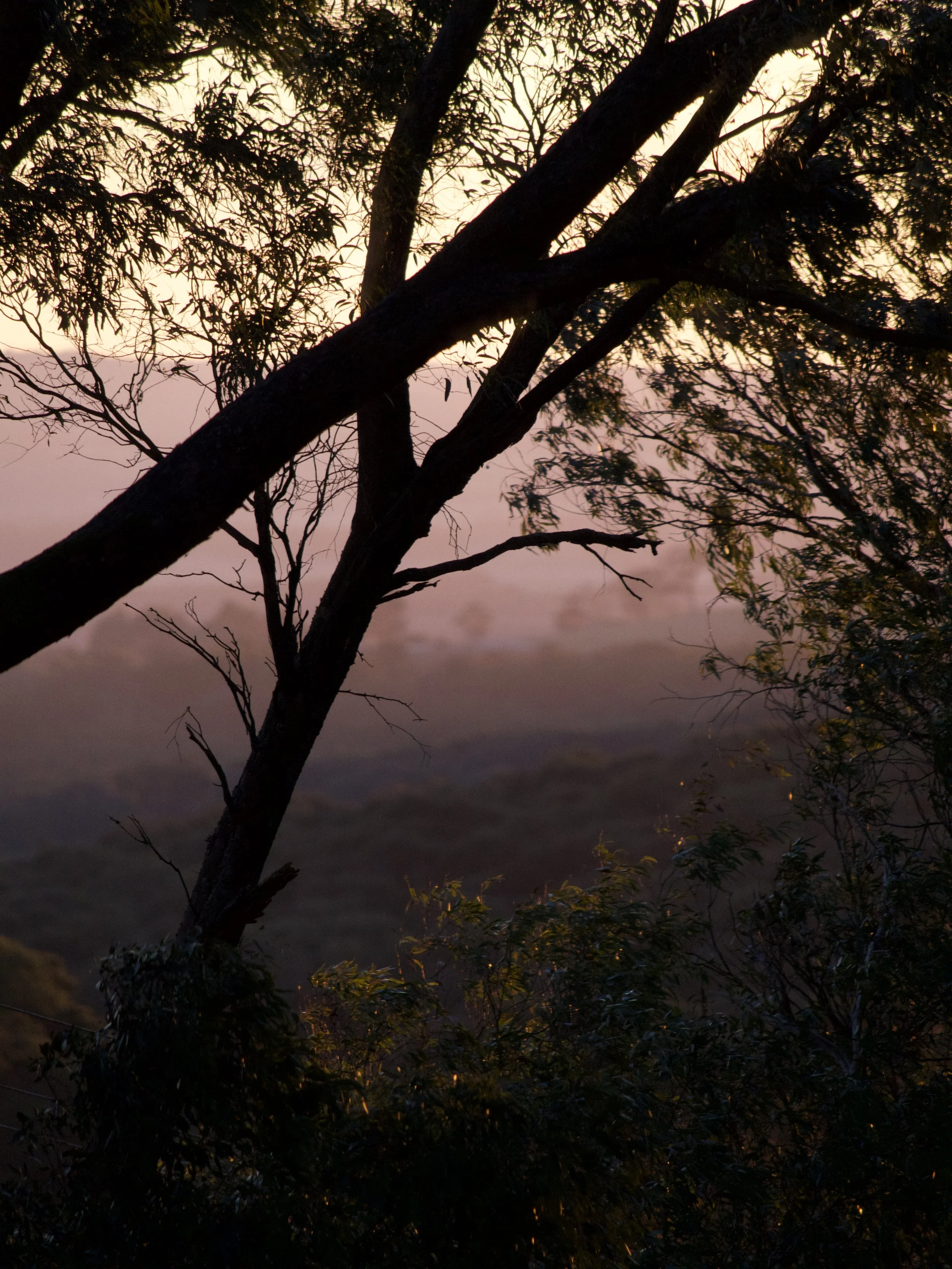
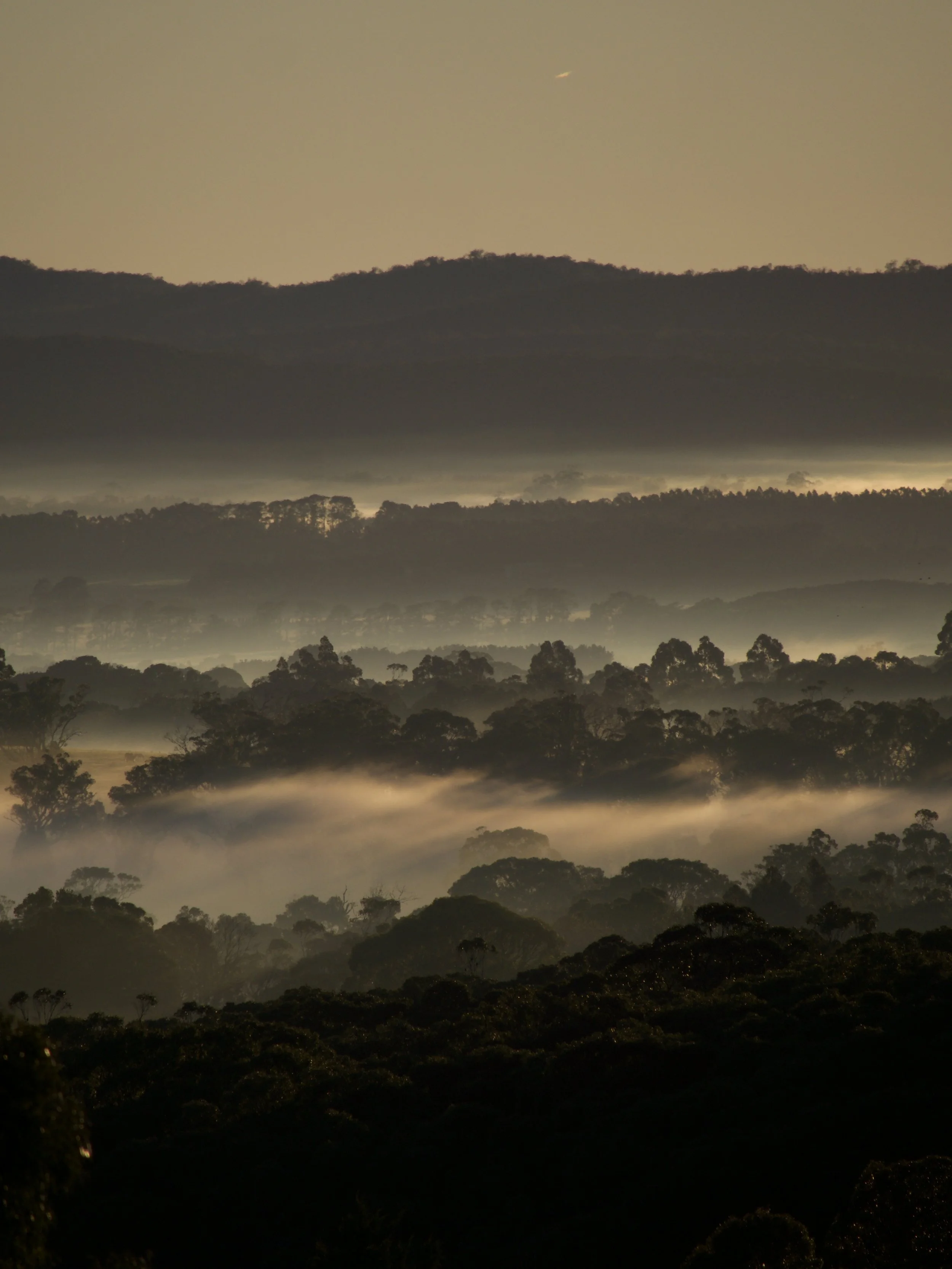
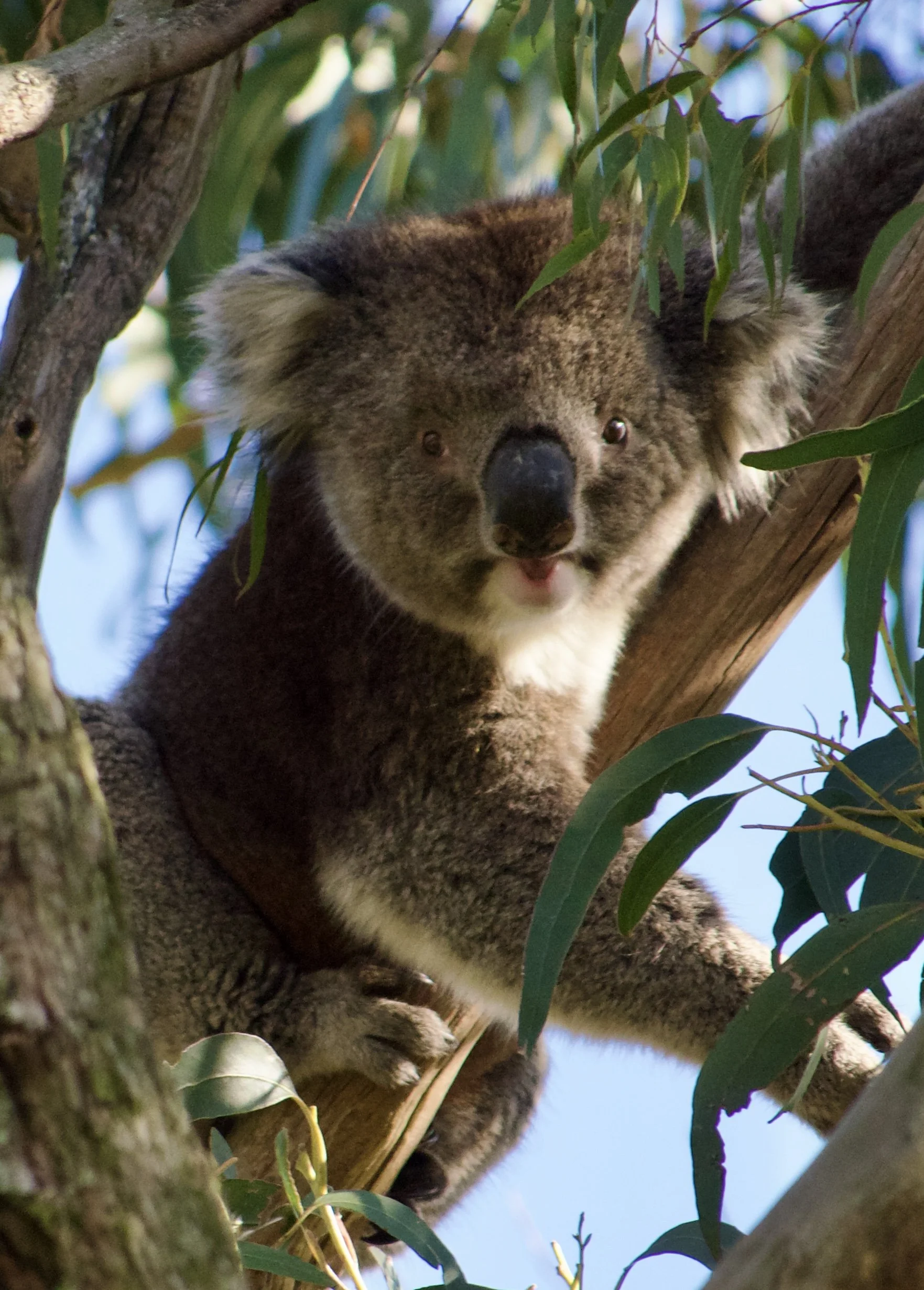
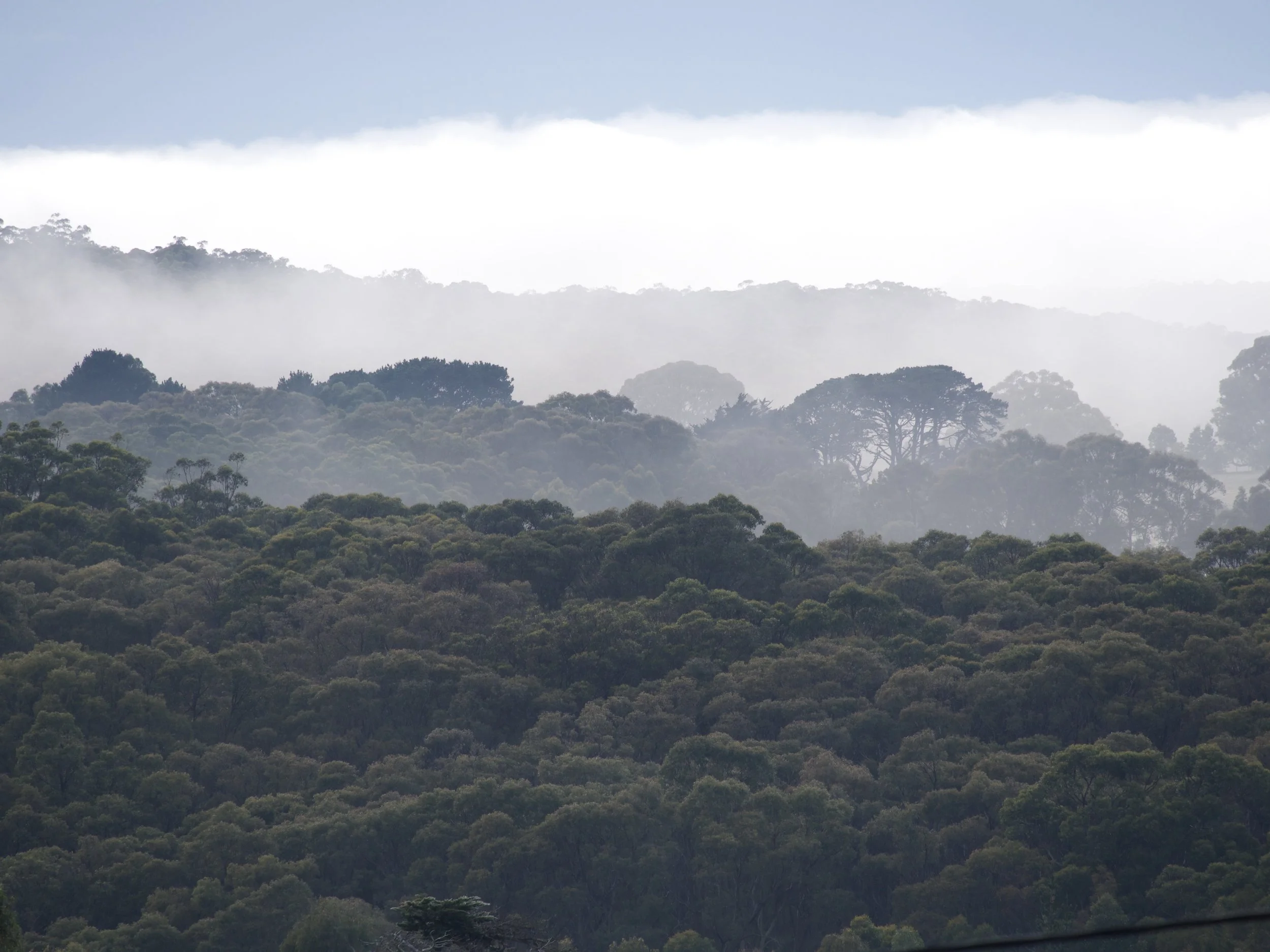
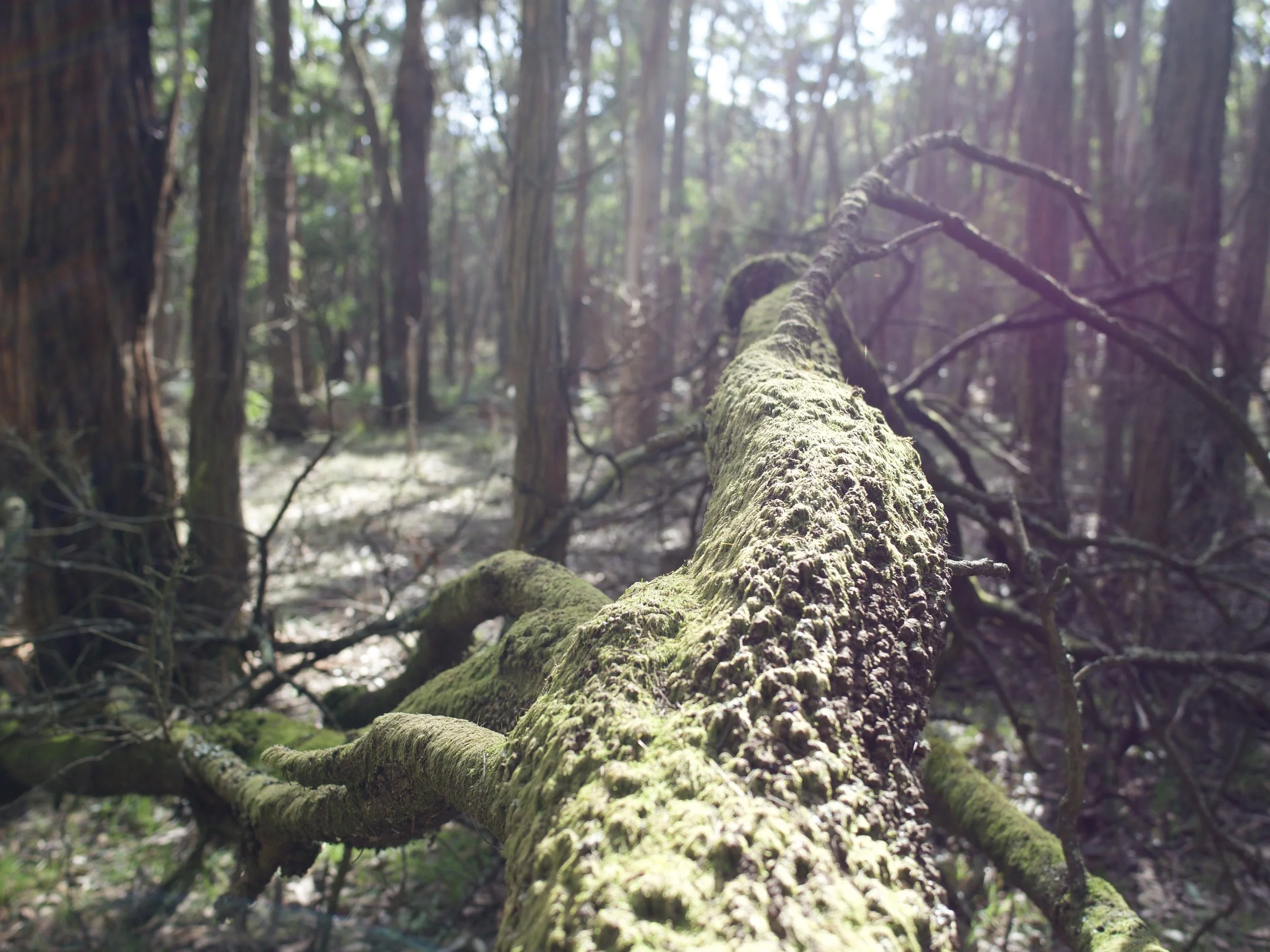
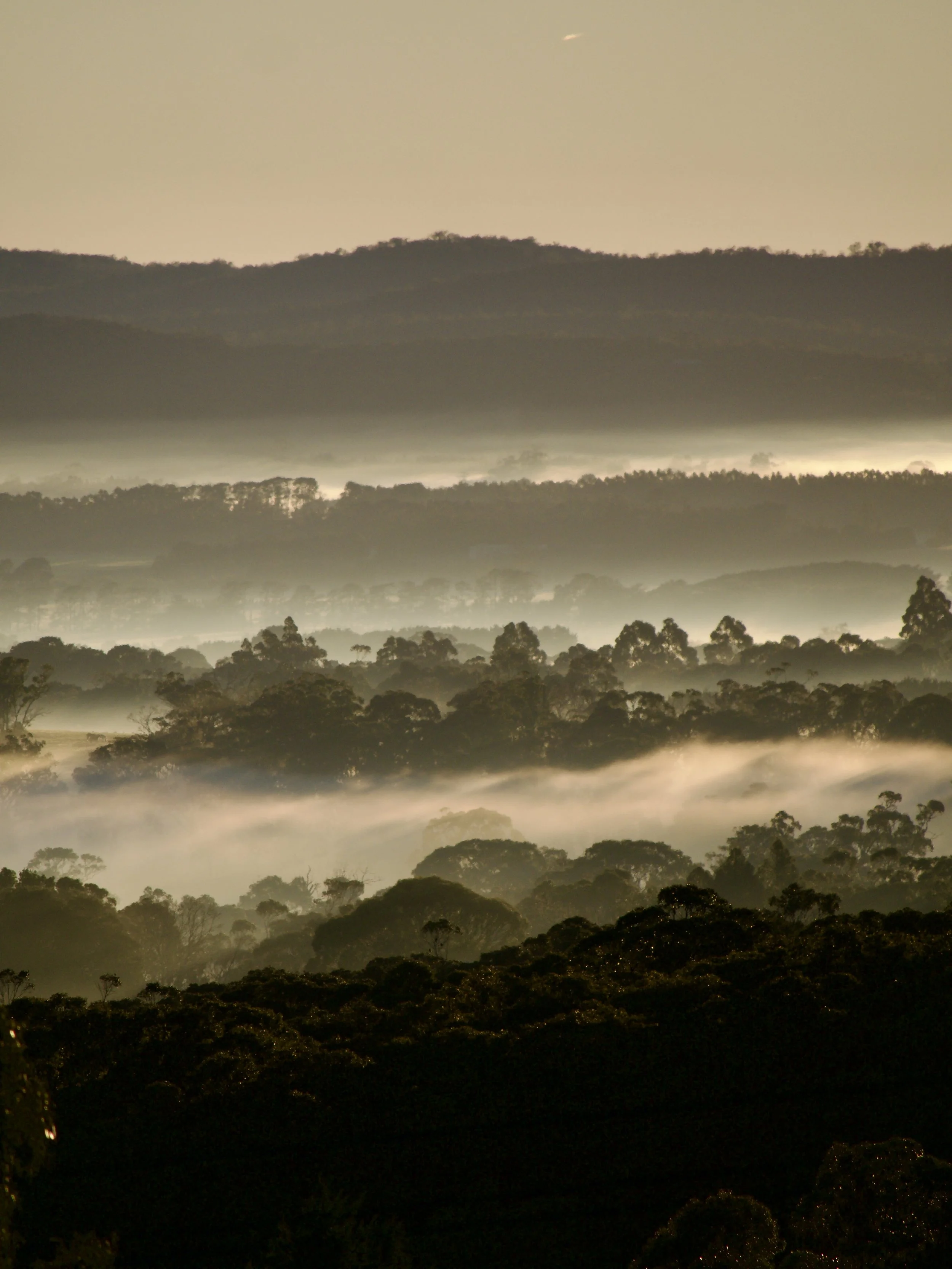
Moonlite Studios is a working studio for wood, sound, drawing, sculpture, teaching and material research.
The work here is slow and materially led.
Wood grows, splits, bends, chars, rings, buckles, opens. Plant colours shift. Sound moves through hollow forms, rooms, bodies and timber. Drawing extends across drafting, mapping, notation, pattern work and sensorimotor mark making.
We are interested in the crossings between making and sensing: the way one practice alters another, the way sound changes how timber is understood, the way drawing can become a tool for listening, measuring, remembering or finding a path through. We are interested in the meeting points between craft, sound, ecological attention, body-knowledge and experiment.
Materials are met as things with long lives of their own. A piece of wood has already been through growth, drought, soil, weather, injury, rot and time by the time it reaches the workshop. A colour carries plant matter, season, water, surface, light and chemistry before it settles into use.
The work keeps returning to the ethics of taking, gathering, shaping and listening: what can be used, what should be left alone, what a material asks after it has been cut, fallen, collected or altered.
Sometimes this becomes furniture, sculpture, sound work, drawing, film, textiles, field recording, teaching or plant-based material tests. Sometimes it means waiting, adjusting, or letting an unexpected material response become the lesson.
WAYS OF MAKING
Ross works with wood, sound, sculpture and furniture.
His work comes from long attention to timber: how it grows, bends, holds strain, carries damage, and brings the conditions of a forest into the workshop. He makes sculptural furniture, sonic works, listening devices and environmental sound instruments. Some pieces are made for use. Some are made to hum, resonate, amplify, or change how a body feels a room.
Drawing is part of how Ross finds form. Alongside drafting, prototyping and workshop judgement, he uses frottage, stick drawing, rough mark making and other experimental methods to loosen the path between hand, timber and shape. These drawings are not only plans. They are ways of testing movement, embodied structures and possibility before a piece settles into matter.
Karla works with drawing, film, sound, textiles, spectral imaging, plant colour and material processes.
Her practice follows what is sensed before it is fully understood: body weather, colour change, pattern, disturbance, the felt condition of a place. Drawing runs through much of the work as sensory bilateral drawing, mark making, mapping, notation and embodied pattern work. Plant and vegetal matter, sound, image and weather become ways of testing what can be known, what remains partial, and what changes in the making.
Together, the practices cross-pollinate slowly: wood changes the sound work, sound changes how a structure is held, drawing changes how a material problem is seen, and teaching brings those questions into the room with other people.
How this place moves…
Moonlite Studios is a working place with several languages of place influencing it.
Furniture is made here.
Sound is tested here.
Timber is bent, cut, joined and listened to.
Pigments shift in jars and on paper.
Drawings accumulate.
Weather gets into the work whether invited or not.
Teaching takes more than one form.
Structured courses in woodworking run alongside open studio practice, material workshops, and mentoring.
Some of what happens here is formally documented. Some grows around the problems, needs, materials and conditions at hand.
A workshop might change with the timber, the people in the room, the weather outside, or the point where a process asks to slow down or change direction.
The studio keeps shifting with materials and place, and the way these move and affect us.
Moonlite Studios is held by Wadawurrung Country. We acknowledge the Wadawurrung People as the Traditional Custodians and honour their unceded sovereignty, culture, and ongoing care for this place. We pay respect to Elders past and present and recognise the responsibilities of working and learning here.
12 Minutes from Ballan train station, arrangements can be made for transfers from the station.
Ballan Station is accessible from Melbourne on the V/Line high speed trains and takes about 1 hour and 5 minutes.
Exact times here: www.transport.vic.gov.au